
Plantinformation
HOME OF PROVEN WINNERS®
Plant Information
Tiny Wine® Gold
Physocarpus
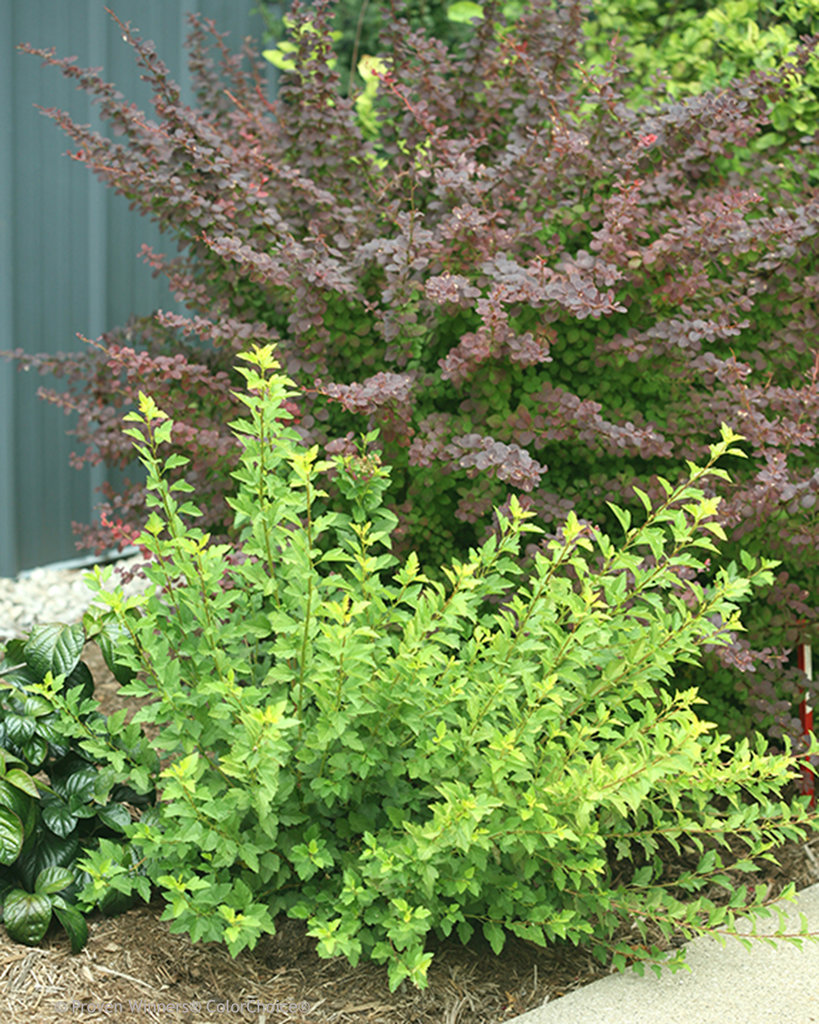
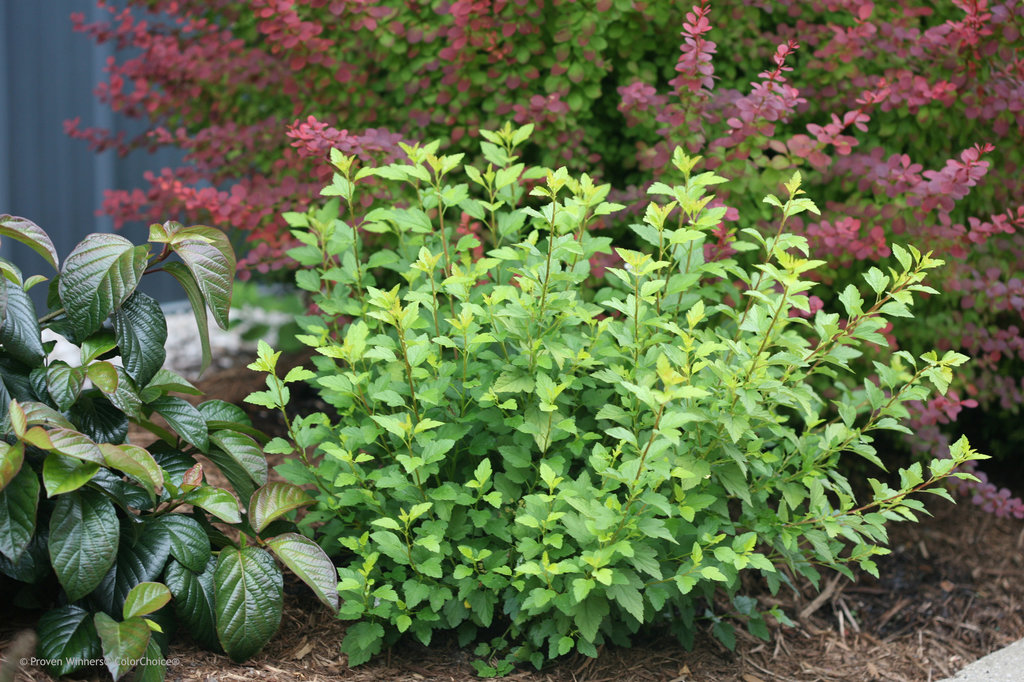
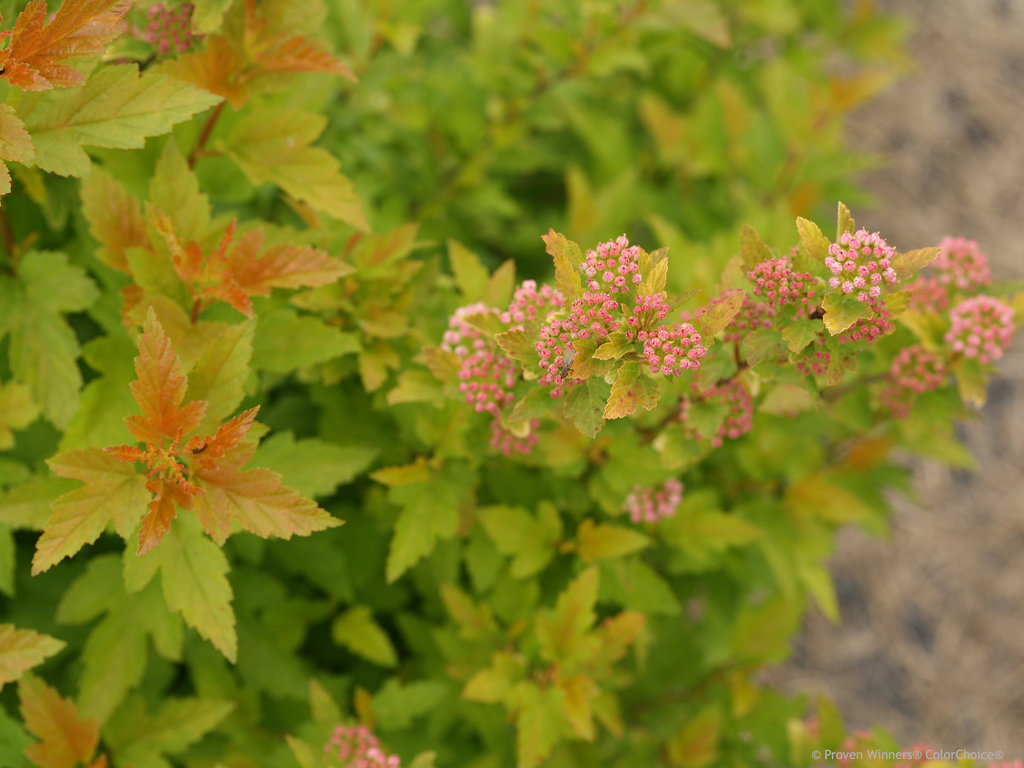
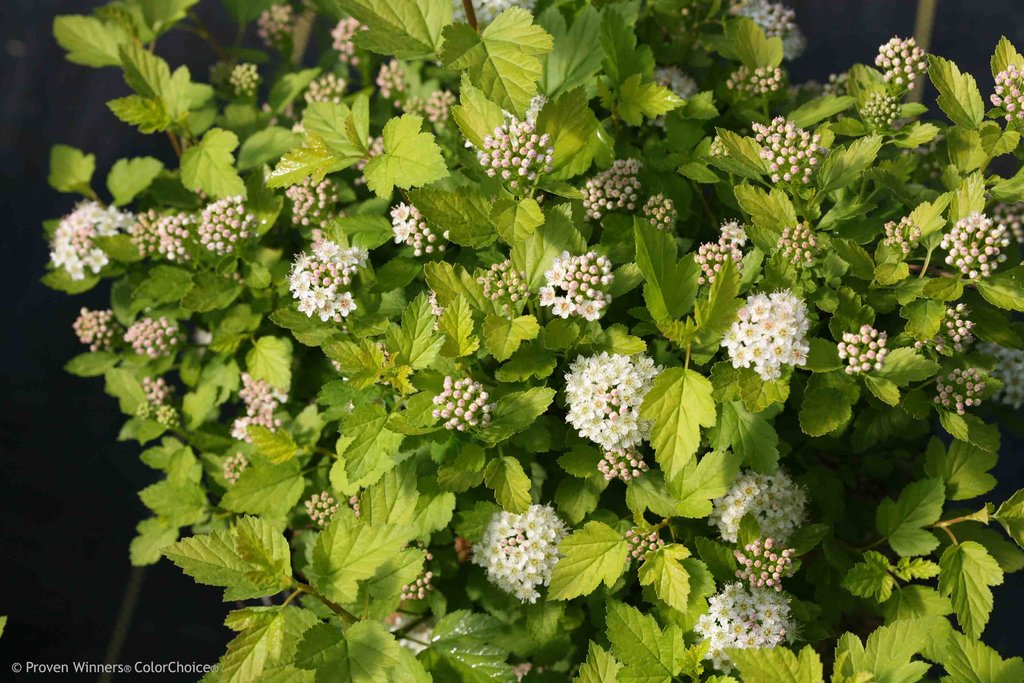
Offers brilliant yellow new growth and refined foliage. Dozens of clusters of white-pink flowers appear in late spring. It is shorter and more upright than other ninebarks, making it a great choice for many different landscape features.
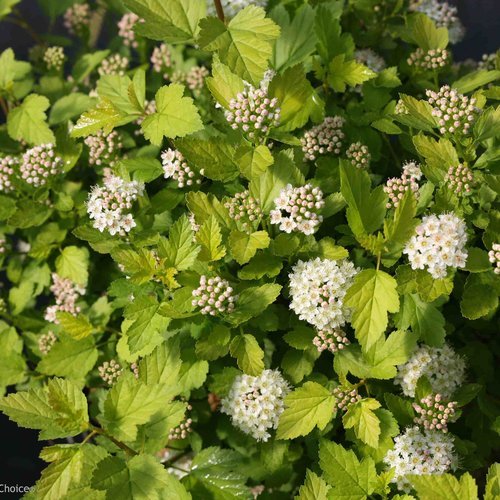
| Blossom Color | Pink, White |
| Bloom Season | Spring to Summer |
| Exposure | Full Sun |
| Height | 36-60 in |
| Width | 36-60 in |
| Spacing | 36-60 in |
| Container Sizes | 28, QT |
| Hardiness Zones | 3, 4, 5, 6, 7 |
| Wildlife Attracted | No Wildlife Attracted |
| Wildlife Deterred | No Wildlife Deterred |
| Features | Offers brilliant yellow new growth and refined foliage. Dozens of clusters of white-pink flowers appear in late spring. It is shorter and more upright than other ninebarks, making it a great choice for many different landscape features. |
| Adaptable as a Houseplant | No |
| Bog Plant | No |
| Is Disease Resistant | No |
| Drought Tolerant | Yes |
| Edible | No |
| Erosion Control | No |
| Fragrant Flower | No |
| Fragrant Foilage | No |
| Heat Tolerant | No |
| Native to North America | Yes |
| Salt Tolerant | No |
| Succulent | No |
| Water Plant | No |
| Uses | |
| Maintenance Notes | All ninebarks are best left unpruned, as they naturally take on a graceful, appealing habit. If you'd like to prune your plant, do so after it flowers. Plant in full sun; ninebarks are drought tolerant once they are established. |